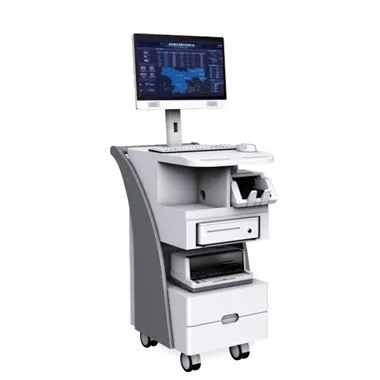
Self-service terminals are mainly used to alleviate the problem of large crowds in business halls and increase the speed of business processing. They are mainly used in banking, telecommunications, electric power, medical, aviation, retail and other industries.
The self-service terminal is based on the system design concept of "24-hour self-service", which can alleviate the problem of excessive traffic in traditional business halls, make up for the lack of original business hours, avoid the troubles of customers handling business in the business hall, and make customers feel relaxed , Convenient and considerate service. The self-service terminal of the business hall is an extension and supplement to the service of the business hall. Users in the financial industry can perform account inquiries, self-service transfers, statement printing, re-issuance, and self-service loss reporting services; users in the communications industry can perform self-service mobile phone shutdown (return) and phone bill inquiries by entering their phone number through the terminal Printing, payment, invoice printing, caller ID, GPRS and other basic services are opened and closed; you can also purchase mobile phone cards and password recharge receipts. Through value-added development, other value-added services such as commodity purchases can also be realized through supporting equipment. This equipment has the advantages of saving personnel expenses, lowering operating costs, continuous working for 24 hours, error-free operation, etc., and can be placed in public places such as telecommunications business halls, toll collection points, stations, docks, airports, large shopping malls, etc.
Bank self-service terminal functions Bank's self-service terminals mainly include basic functions such as cash withdrawal, cash deposit, cash deposit and withdrawal, balance inquiry, transfer between the bank and different banks, password modification, etc.; some multi-function self-service terminals also provide A series of convenient services such as passbook printing, statement printing, check deposit, envelope deposit, payment, recharge and so on.
Self-service terminal wireless application trend
Digital Signage is a brand-new media concept that publishes business, financial and entertainment information through large-screen terminal display devices in large shopping malls, supermarkets, hotel lobbies, restaurants, cinemas and other public places where people gather. Multimedia professional audio-visual system. The characteristics of advertising information broadcast to a specific group of people in a specific physical place and a specific time period have allowed them to obtain the effect of advertising. In foreign countries, some people put it alongside paper media, radio, television, and the Internet, calling it the "fifth media."
With the continuous development of modern technology, the application of digital display technology will be everywhere. Relying on the integration of network (3G/4G wireless network) and multimedia technology, publishing and processing in the form of media, and timely interaction with customer feedback information, it has been widely used in finance, telecommunications, hospitals, stores, supermarkets, hotels, and public places. And other fields, with the characteristics of multiple points of dispersion, put forward higher requirements in centralized management and maintenance, the application of Hongdian 3G routers in digital signage has solved this problem well.
Digital signage system composition:
The digital signage system consists of three parts: digital signage terminal, H7920 3G router and operation management service center platform. Among them, the digital signage terminal includes a controller, a playback terminal, and a display terminal, and is used as a machine terminal that can be directly operated by customers.
In fact, everyone has seen self-service terminals. It can be said that the self-service terminal is the most common type of machine in our lives, and it will soon be solved in our lives. For example, self-service ticket vending machines at railway stations and bank self-service processing machines are all self-service terminals. With the improvement of living standards, the use of self-service terminals has become more and more widespread in our lives.